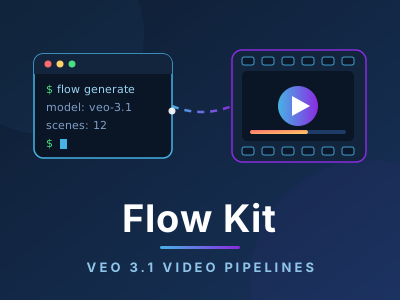
AI Video Generation
Flow Kit
Turn your AI agent into a cinematic video studio
- Veo 3.1
- OmniVoice TTS
- Claude Code
- Codex

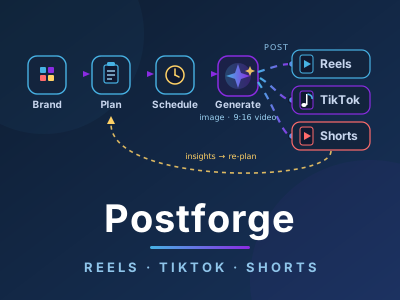
Auto-post images & 9:16 video to Reels, TikTok, Shorts
A local-first content engine that plans, renders, and auto-publishes post images and 9:16 vertical videos to Facebook, TikTok, and YouTube on schedule, then measures each post's insights to re-plan the next batch. The content pages it runs have passed 2M+ video views — with no cloud bill.
Short-form content is a treadmill. Brands are expected to post images and vertical video to Reels, TikTok, and Shorts every day, across multiple pages, and the tools that promise to help charge per seat and per generation while pushing your content through their cloud. We wanted a system that could plan, generate, and publish short-form content on schedule — running entirely on your own machine, with no cloud bill.
Postforge is a local-first dashboard that runs the whole short-form loop: plan → render → schedule → post → measure insights → re-plan. You set up each page's brand; AI plans what to post, renders the post images and 9:16 vertical videos, and Postforge auto-publishes them to Facebook, TikTok, and YouTube — multi-page and on schedule, entirely on your PC. Then it reads each post's insights and feeds them into the next plan, with idempotent retry so nothing double-posts.
Postforge runs on a Bun and Hono backend with a React dashboard and a local SQLite store, so all state lives on your machine. Text is drafted by DeepSeek, images by Google Flow, and voiceovers by OmniVoice, with ffmpeg assembling the 9:16 videos. The scheduler publishes on time and retries idempotently, so a hiccup never double-posts or drops a slot.
The content pages Postforge runs — planned by AI, rendered by AI, and auto-published to Facebook, TikTok, and YouTube — have passed 2M video views, at zero cloud cost because generation and storage stay local. It is our proof of a workflow-automation principle we bring to clients: keep humans in the loop with per-page review, keep control on your own infrastructure, and let the pipeline — and the insights it measures — handle the repetitive work.
Turn your AI agent into a cinematic video studio
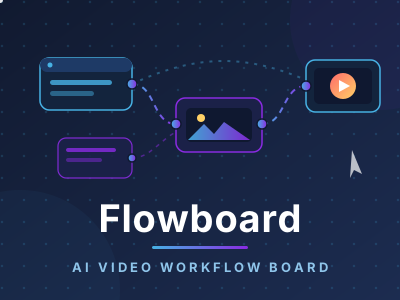
An infinite canvas for AI product videos
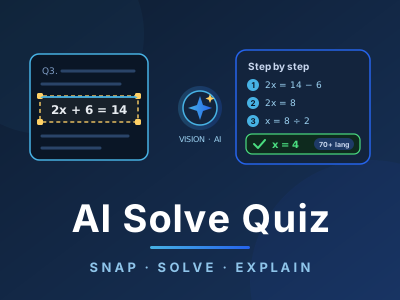
Snap any question, get the steps behind the answer